
Visit Larson Publications for special discounts
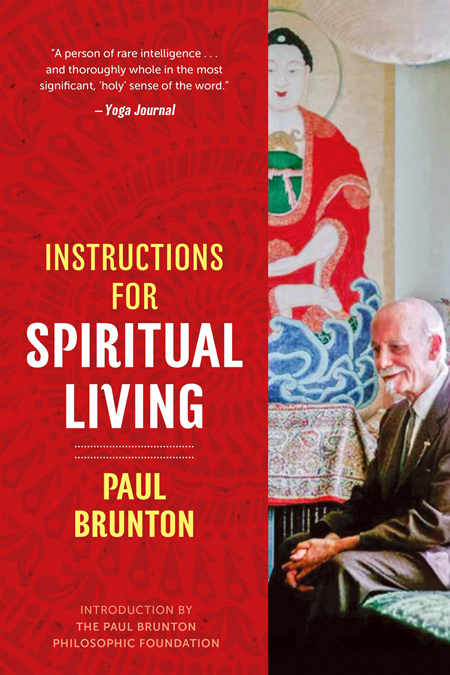
Instructions for Spiritual Living
by Paul Brunton
253 pp., $16.99, 6 x 9″
Inner Traditions International, ISBN 978-1-62055-804-1
eBook also available from major online retailers (Amazon, Barnes & Noble)
Audiobook also available!
Listen to interviews about this book with Foundation Board member Jeff Cox here.
“A truly comprehensive and authoritative work that should be read by sincere seekers and advanced adepts alike. Paul Brunton’s work demonstrates a real mastery of the intricacies of spiritual life. His sagely conclusions on a number of key topics rarely covered elsewhere in spiritual literature provide an important contribution to our contemporary understanding of awakening and enlightenment….We are very fortunate that his writings are available.” —Stephen D’Amico, author of Heaven on Earth and The Incredible State of Absolute Nothingness
No matter where we are in our spiritual development, we all have questions that need clarification about our practice and what we are experiencing—both the challenges and openings. We need trustworthy answers that go deeper than those available in the many general books on the inner life, useful though they may be.
Paul Brunton provides instructions to guide one’s development in three fundamental areas of the spiritual path: meditation, self-examination, and the unfolding of awakening. Guiding you with insight and care through each stage of meditation, including advanced states that deepen one’s inner life, he explains how meditation is the art and practice of introverting attention, of freeing oneself for a period of time from thoughts, sensations, and feelings and allowing the soul to reveal itself out of the quiet that one has created. He explains the goal of each meditative stage and the obstacles you are likely to face, and he examines the need for spiritual dependency on any particular guru, teaching, or practice, showing that following your intuition can bring spiritual success.
Exploring the process of self-examination and emotional purification, Brunton shows how life’s challenges are moments by which we can make real progress in our surrender to a higher life. He reveals how to break free from the ego, follow your intuition to align with your ideals, and tap into the inspiration flowing from within. He also examines the development of transcendental insight, the cornerstone of compassionate wisdom in action, which allows us to become a source of inspiration to all we encounter.
Comprised of writings received by the Paul Brunton Philosophic Foundation after his death, this guide offers transformative wisdom to aid our understanding of what the spiritual journey entails, help point the way when the way is uncertain, and learn and grow from the challenges that arise as you develop spiritually.
Read what other author/teachers have to say about this book. Instructions for Spiritual Living was excerpted on InnerSelf.com
This is a new and very transformed edition of Essays on the Quest, originally published in 1984.
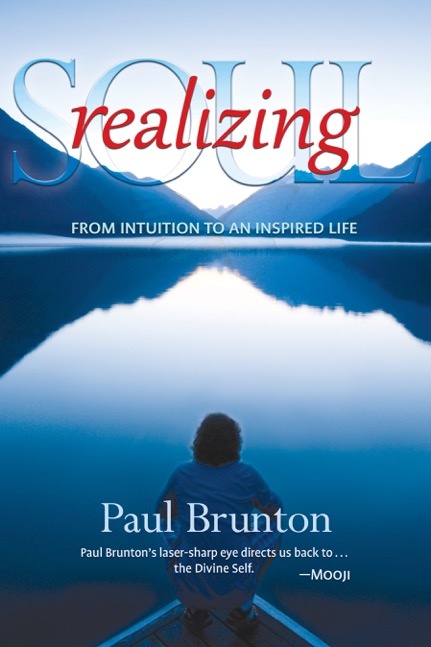
Realizing Soul: From Intuition to an Inspired Life
by Paul Brunton
160 pp., $14.95, 6 x 9″
Larson Publications, ISBN 978-1936012-32-9
eBook also available from major online retailers (Amazon, Barnes & Noble)
In addition, a free Realizing Soul Study Guide was created by Robert Larson, PB’s Swedish publisher.
“Paul Brunton’s wisdom is like the child’s voice in the story, ‘The Emperor’s New Clothes.’ His observations, spiritual insights, and pointings reveal a laser-sharp eye that directs us back to that which is obvious within ourselves, though obviously overlooked—the Divine Self.” —Mooji
This new presentation of Paul Brunton’s acclaimed work features teachings on life’s deepest purpose from www.paulbruntondailynote.se—a popular international website where inspiring selections from the encyclopedic The Notebooks of Paul Brunton are presented in 19 languages every day of the year by native speakers. Realizing Soul is an ideal inner guide for people who feel that “there must be something more” as well as for seasoned spiritual practitioners.
Intuition is the often overlooked gentle voice of the Overself. Attending to it is the beginning of surrender to its guiding wisdom and eventuates in glimpses, or temporary shifts of identity from the ego to the Overself. By following the long and short paths described here, eventually the Overself claims its offspring, the ego, and expresses itself through inspired living.
Paul Brunton is widely esteemed for creatively integrating the world’s sacred teachings into a practical, satisfying vision of spiritual life for our times. Major reviewers praise his work as “a rich vein of wisdom,” “sensible, deep, and original,” that “can stand beside Merton, Huxley, Suzuki, Watts, and Radhakrishnan.” Here is a review posted on the Spirituality & Practice website.
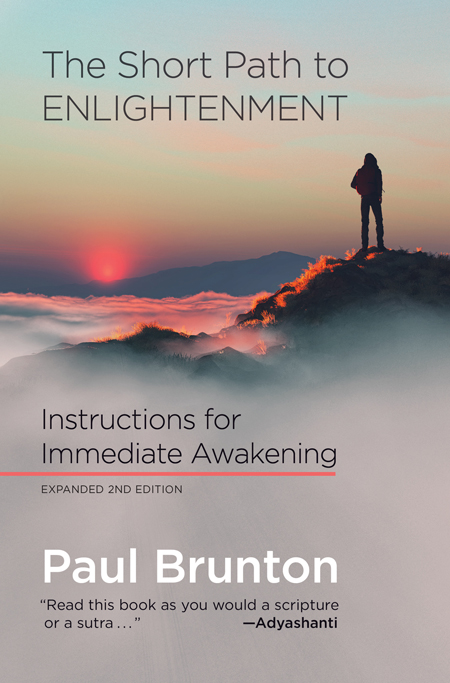
The Short Path to Enlightenment: Instructions for Immediate Awakening
by Paul Brunton
$18.95, 182 pp., 6 x 9″
Larson Publications, ISBN 978-1-936012-39-8
eBook also available from major online retailers (Amazon, Barnes & Noble)
This new, expanded edition brings forward the importance of joy and love and grace in Short Path practice, plus offers additional meditations and teachings to help practitioners realize their goals.
“Paul Brunton gives voice to the profound teachings of immediate spiritual awakening that have the power to short circuit the seeker in us and reveal the true nature of reality here and now. The true gift of this wonderful book is in how nuanced and subtle Paul Brunton understood these profound and transformational teachings and how directly he conveys them. Read this book as you would a scripture or a sutra and let it open your eyes to eternity.” –Adyashanti
“The Short Path to Enlightenment is a deeply supportive text from the extraordinary Paul Brunton, the spiritual explorer who first brought knowledge of Ramana Maharishi to the West. In this work, readers receive the invitation and instruction to discover the truth of oneself. This book is alive with supreme knowledge. May it support you in immediately and continually recognizing yourself.” –Gangaji
These accessible teachings distill the essence of currently popular and traditional sudden-awakening teachings (Advaita, Zen, Dzogchen, etc.). Paul Brunton calls them “Short Path” teachings. A simple recognition, a brief moment of grace, can make what seemed like a far-off spiritual goal actual here and now. But we need reliable pointers for when and how and where to look. Brunton delivers the essence and practices of this path in direct, jargon-free language.
Includes:
* How to move from the Long Path of spiritual disciplines to the Short Path of direct insight
* Short Path exercises
* Experiences along the way
* Warnings
* Stages of realization
* Stabilizing the awakening
* The nature of lasting enlightenment/the Sage
Read reviews including radio and video interviews for: The Short Path to Enlightenment
“The Short Path to Enlightenment was my introduction to this great sage. The passages are so profound that I often lose track of time, just sitting with one of them. Cannot recommend PB’s books and practices enough. The website is marvelous as well. Thank you.”- Kavitha Chinnaiyan, author
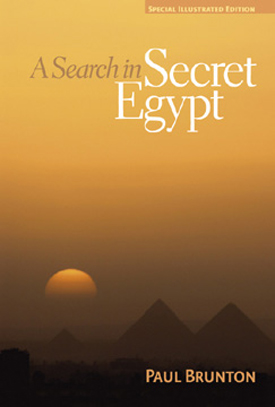
A Search in Secret Egypt: Special Illustrated Edition
by Paul Brunton
A guide to the mysterious, the occult, and the sacred realms of Ancient Egypt
Larson Publications ISBN 0-943914-98-1
978-0-943914-98-5
* 82 Original B&W photos taken by Paul Brunton
* 144 New color photographs
* 44 Diagrams, drawings, and maps (Karnak, Luxor, Cairo)
* 7.5″ wide x 11.25″ high, 303 pp.
* Fine coated paper
* Deluxe cloth edition, Normally $110, Special sale $39.96 through Larson Publications
In the fascinating context of exploring the mysteries of Ancient Egypt, the teachings of Islam, the remarkable feats of real magicians, and authentic snake-charmers, PB presents us with indelible lessons in how the body is really within the mind, and how we may directly experience our higher self as free and independent of this mortal world. This beautifully illustrated edition allows you to see what PB saw (sometimes from his own camera!) and literally walk where he walked amongst the streets of Cairo and the ruins of Karnak. This is an essential book for anyone interested in understanding the truth of Ancient Egypt.
Read reviews for: A Search in Secret Egypt
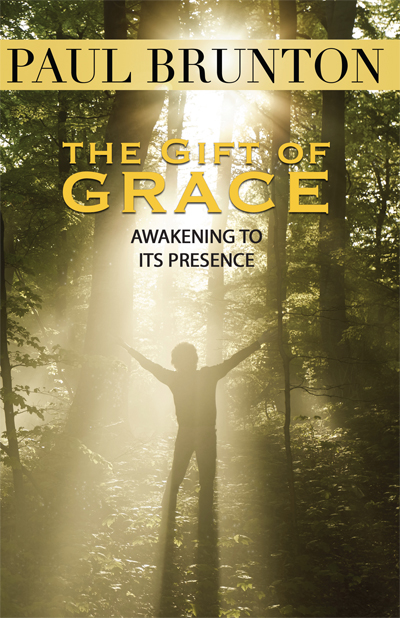
The Gift of Grace: Awakening to Its Presence
by Paul Brunton, compiled by Sam Cohen
Larson Publications, ISBN 1-936012-27-8
978-1-936012-27-5
$10.95, 144 pp., 5 x 7.5
eBook also available from major online retailers (Amazon, Barnes & Noble)
Hope shines brightly in this selection of gems from Paul Brunton’s writings on Grace. Once we penetrate this deep teaching, Grace, with its assurance of growing goodness and light, becomes a certainty. Based on thorough study, scientific inquiry, intuition and inner penetration, PB establishes extraordinary revelations about the infinite reality and divine intelligence that supports, guides and inspires this life. Grace is a beacon of light that never allows us to go irrevocably astray as we run, walk or crawl our karmic and evolutionary paths. This small volume presents a taste of PB’s profound work on this subject.
Read reviews for: The Gift of Grace
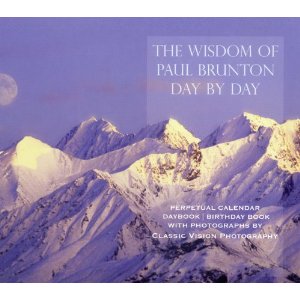
Perpetual Calendar: The Wisdom of Paul Brunton Day by Day
Larson Publications, ISBN 1-936012-29-4
978-1-936012-29-9
$20, 112 pp. cloth, 7” x 6”
The calendar, also called a “daybook” or “birthday book,” and used to record and remember birthdays and anniversaries year after year, is a handsomely produced 7” by 6” hardcover divided into weeks. It includes PB quotes beside 52 dazzling photos by Haji Mahmood (Classic Vision Photography), a relatively new student of PB’s philosophy, who was actually encouraged to approach the Foundation to initiate such a collaboration by his 86-year-old aunt, who is well-read in and devoted to PB’s work. The calendar is wonderful for both personal use and to give as a gift; it serves as a way for those of us already familiar with PB’s wisdom to apply it to our daily lives as we review the paras selected, and it also serves as a generous way to give the gift of PB’s wisdom to those we love. And, like all of the publications for sale at our store, the calendar also serves as a fundraiser to further the PB’s vision through the Foundation’s many projects.
Read reviews for: Perpetual Calendar

What Is Karma?
by Paul Brunton
A simple guide to the truth about the subtle and powerful Law of Recompense
Larson Publications, ISBN 0-943914-87-6
978-0-943914-87-9
$10.95, 144 pp., 5 x 7.5
eBook also available from major online retailers (Amazon, Barnes & Noble)
A fresh and positive look at the ‘law of karma’—the spiritual reality that we are all accountable for our actions. This little book sets aside dogma and doctrine and reveals the simple reality of this law—and how we can use it for our own spiritual growth, as well as to help others. This book is part of our Prison Project; to purchase copies as gifts for prisoners, please contact us at information@paulbrunton.org or donate online. A Spanish translation of this book was done by Pam-Maria Ochoa and can be read here.
Read reviews for: What Is Karma?
Meditations for People in Crisis
by Paul Brunton
Thoughts to guide us through the chaos within ourselves and in the world
Larson Publications, 0-943914-77-9
978-0-943914-77-0
Collated from The Notebooks of Paul Brunton
by Sam Cohen and Leslie Cohen
$10.95, 112 pp., 4.75 x 7.25
eBook also available from major online retailers (Amazon, Barnes & Noble)
Whether we are facing a crisis ourselves, we are called upon to help others in their times of need, or simply when we are overwhelmed by the turmoil of the times in which we live, these paras will provide peace and insight. PB’s ideas can show us a way forward, or rather inward, into our own still center, a vantage point from which right action and clear insight invariably arises.
Read reviews for: Meditations for People in Crisis
Meditations for People in Charge
by Paul Brunton
Direct reminders of who is really ‘in charge,’ and how to gain guidance from the Overself
Larson Publications, ISBN 0-943914-72-8
978-0-943914-72-5
$10.95,112 pp., 4.75 x 7.25
eBook also available from major online retailers (Amazon, Barnes & Noble)
Whether we are currently ‘in charge’ of our own destiny, of the direction of our family or business, or even of a nation, there comes a moment when we know we need guidance—guidance that will be unerring, constructive, and enduring. There is only one such guide for us all: the Higher Self, the Overself. This small book is a collection of PB’s words regarding that guide, how to ask for its presence, and how to respond to its gift of grace.
Read reviews for: Meditations for People in Charge
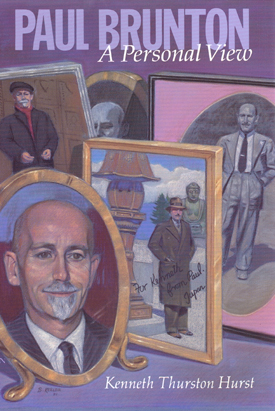
Paul Brunton: A Personal View
by Kenneth Thurston Hurst
A short biography by Paul Brunton’s son
0-943914-49-3
978-0-943914-49-7
$14.95, 320 pp., 5.5 x 8.5, 37 photos
eBook also available from major online retailers (Amazon, Barnes & Noble)
Read reviews for Kenneth’s biography of PB
Kenneth recounts his father’s life from his own perspective, from his earliest childhood memories, and his first recognition of his father’s remarkable stature. Kenneth humbly presents himself as a lifelong student of PB as well as his devoted son; he makes no claims to be his heir or to have the complete story—he simply tells us what he knows and what he experienced. He openly shares with us his dreams and visions, his correspondence and conversations with PB, many of which give us insight into PB’s character and the impact of his presence. This anecdotal volume is informative, charming, and a natural companion to the Notebooks, particularly to Volume 8, where PB records his own reflections about his life.
Kenneth was instrumental in the formation of the Paul Brunton Philosophic Foundation after PB’s death.
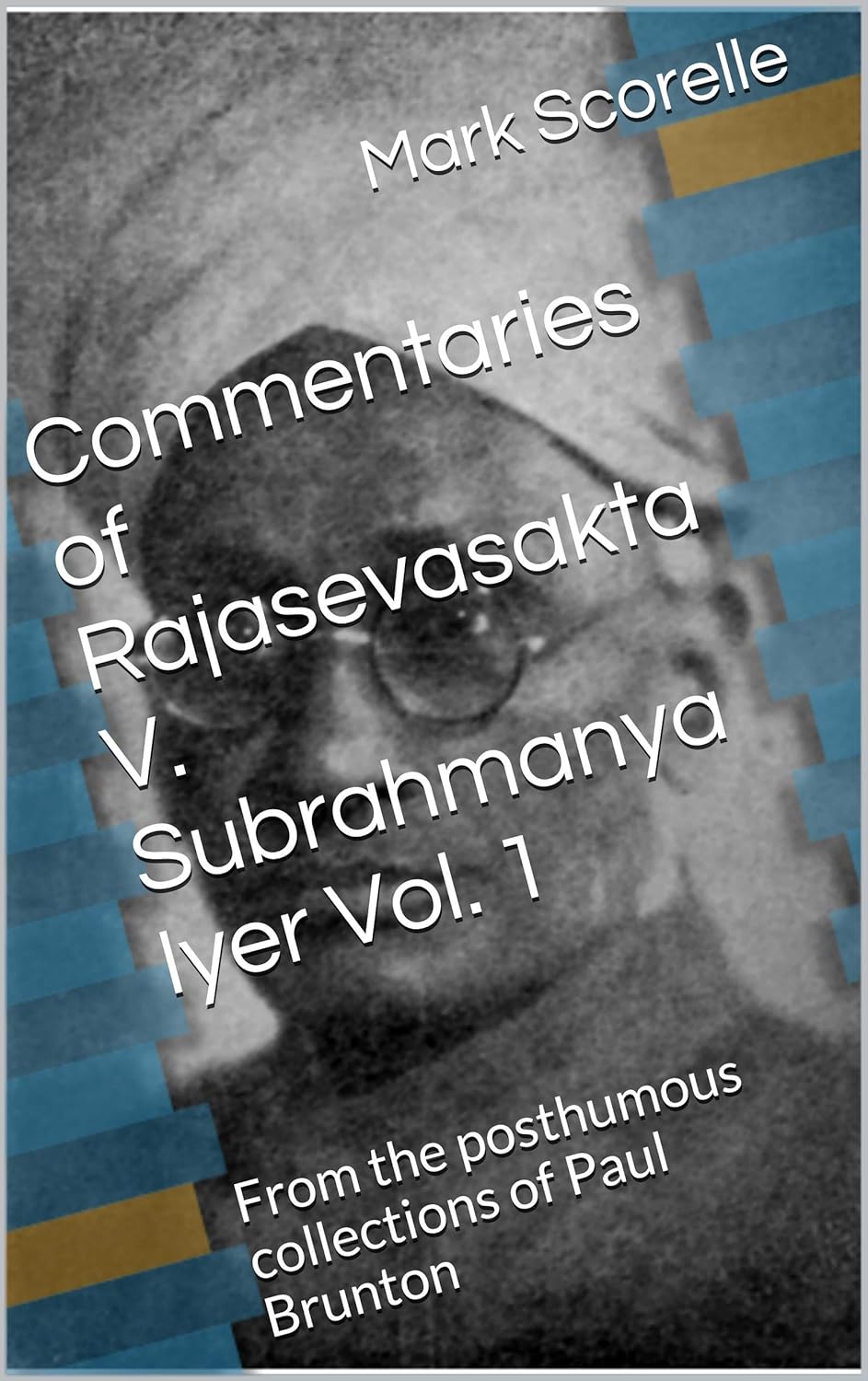
Commentaries of Rajasevasakta V. Subramanya Iyer Vols. 1 & 2
Paul Brunton, editor
Mark Scorelle, compiler & editor
Volume 1, 673 pp., $5.00
Volume 2, 600 pp., $5.00
Available on Amazon (eBooks)
Commentaries of Rajasevasakta V. Subramanya Iyer on Advaita Vedanta philosophy and Hindu Religion. These texts are verbatim notes taken of lectures and talks given by V.S. Iyer in the late 30’s and early 40’s. Iyer was a key figure behind the scenes at the Ramakrishna Mission during a period when they were preparing publications and sending missionary swamis to the West. He was a proponent of the philosophical interpretation called ‘mentalism’ and was a key teacher for Swami Nikhilananda [New York] and Swami Siddheswarananda [France]. These writings are from the Paul Brunton archive (part of the Paul Brunton Philosophic Foundation archive).
Advaita: The Truth of Non-Duality
by V. Subrahmanya Iyer
Andre Van Den Brink, compiler
Mark Scorelle, editor
From the Paul Brunton Philosophic Foundation archive
106 pp. ISBN 9780982525548
Available on Amazon $12.50 paperback
This compilation contains a selection of excellent material from the complete Iyer teachings listed above.
“The nature of truth is to be free from contradictions. We approach nearer and nearer truth as we find less and less contradictions. The only thing which is so free is non-duality…This may be achieved at first, as the Upanishads say, in lightning flashes, in fleeting momentary glimpses, but later this must be established into permanency. You should stabilize them through self-recollectedness to be done throughout the day, and through the constant reminder that the world is not separate from yourself. It is not enough to grasp the intellectual truth of non-duality’…’As the man of realization knows the world to be an idea, a mental construct, the sense of unification and love to all mankind is simultaneously its materialization, for he knows no difference between idea and matter. Hence too he wishes all beings to be happy, loves even his enemy, wishes him no harm, for he knows the truth of universal self-identification. Thus to the extent a man realizes the truth, he can do good and no more’…’Any kind of difference means contradiction. Nothing whatsoever other than the Atman exists. If you think there is another entity, whether man or God, there is no truth. This is the teaching since time immemorial of those who have inquired into truth.” – V. Subrahmanya Iyer
Plotinus: The Enneads
An unabridged, definitive edition of the classic Stephen MacKenna translation
by MacKenna/Paige with Guthrie, Taylor, Armstrong
Religion / Spirituality / Philosophy
0-943914-55-8
978-0-943914-55-8
$75.00, 768 pp., 6 x 9, cloth
eBook also available from major online retailers (Amazon, Barnes & Noble)
“This truly great book is the source of much that is most precious in the whole Western spiritual tradition.” —Jacob Needleman
“MacKenna’s translation of The Enneads continues to capture the ‘voice’ of Plotinus as no other English version does.” —Huston Smith
“For the rapture of its wild genius, MacKenna’s Plotinus is the most inspiring and instructive single volume in my library . . . a source of the deepest ideas the mind can think, it is also a bible of beauty.” —James Hillman
This book is simply the most exalted translation of one of the finest products of the human mind. Our edition makes it truly “the thinking person’s Plotinus” as well: Endnotes compare MacKenna’s original translation with hundreds of debatable revisions made by editors in editions published after his death, and show how other major translators (A.H. Armstrong, K.S. Guthrie, Thomas Taylor) handle these same passages.
Bonus: a detailed appendix from Anthony Damiani’s groundbreaking work with The Enneads.

4936 NYS Route 414
Burdett, New York 14818
USA
© 2024 Paul Brunton Philosophic Foundation.

Czech

Spanish

Portuguese